
Investigate how AI automation can streamline operations for small service providers—booking, billing, and customer follow-ups—highlighting affordable tools, workflows, and measurable efficiency gains.

The Quiet Revolution: AI Agents Running Booking, Billing, and Follow-ups for Small Service Providers

The Quiet Revolution: AI Agents Running Booking, Billing, and Follow-ups for Small Service Providers

The Quiet Revolution

AI Agents Running Booking, Billing, and Follow-ups for Small Service Providers

WINTER 2025

The Administrative Revolution

Why Small Service Providers Are Turning to AI automation

Walk into any small service business today—a dental practice, a home-care agency, a boutique salon—and you'll see the same scene behind the counter: administrators toggling between calendars, invoices, and texts while the phone never stops. It's not a lack of hustle; it's a wall of repetitive work. That wall is finally cracking. Over the past two years, AI automation has crossed a threshold from novelty to necessity, particularly in booking, billing, and customer follow-ups. The payoff isn't theoretical. It's measurable, and increasingly non-negotiable for staying competitive.

The administrative drag, quantified

A 2025 McKinsey analysis pegs efficiency gains from automation at up to 40% for SMEs, with the fattest slices of value in scheduling, billing, and routine communication. Gartner reported in 2024 that 62% of small service providers have already adopted at least one AI-powered scheduling or billing tool, and 45% of those adopters saw customer retention improve—largely thanks to consistent, timely follow-ups.

"AI automation is no longer a luxury but a necessity for small service providers aiming to compete."

Those aren't vanity metrics; they're the algebra of better margins. In practical terms, this means fewer no-shows, faster cash collection, and more repeat business without adding headcount. Our Services team has witnessed this transformation firsthand across dozens of small providers.

From luxury to mandatory capability

As Dr. Emily Chen, an AI strategist at the Small Business Institute, put it: "AI automation is no longer a luxury but a necessity for small service providers aiming to compete. Automating routine tasks like booking and billing frees up valuable human resources to focus on personalized customer service and business growth."

Market momentum backs her up: the AI-for-small-business segment is on track to hit roughly $12 billion by 2027, with a 22% growth rate fueled by simplified integrations and tiered pricing that doesn't punish smaller budgets.
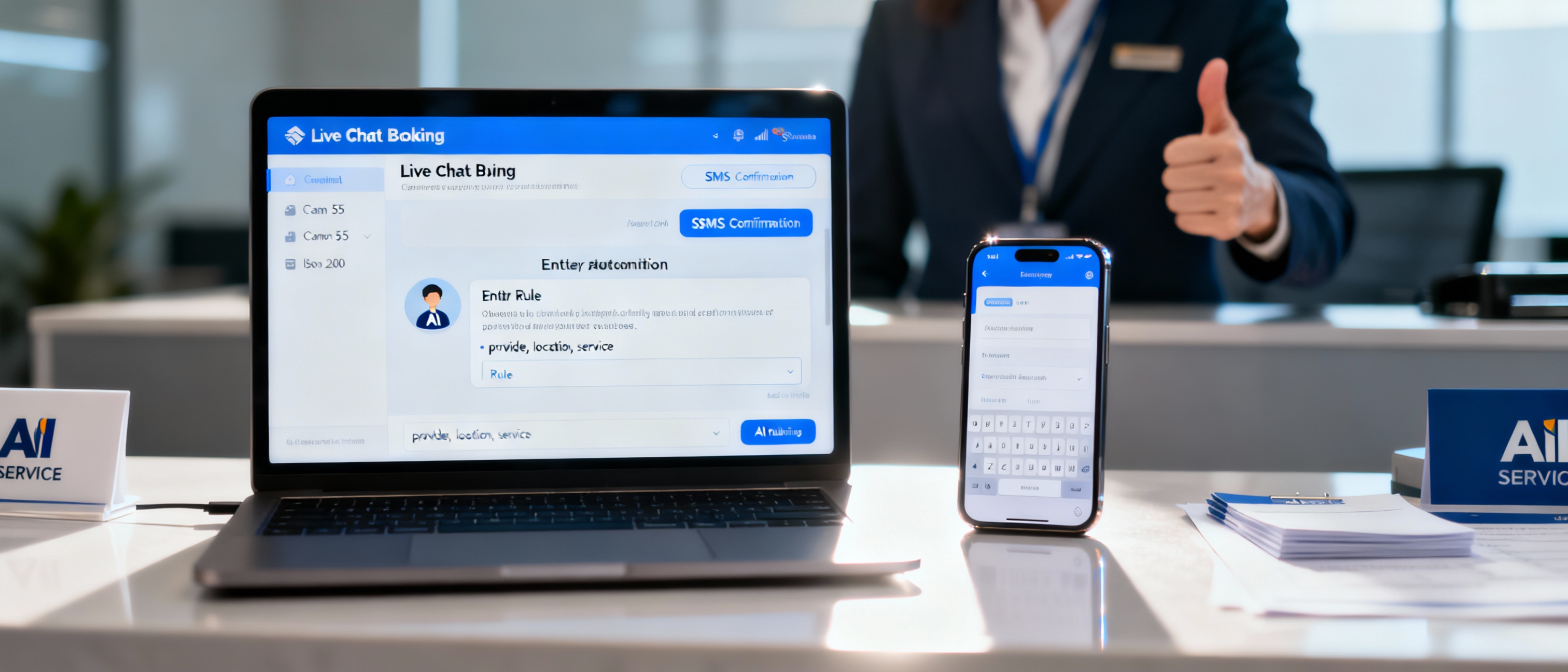
AI agents managing booking systems

From Booking to Billing

The new operating model

Here's the shift in plain language: instead of trying to hire your way out of administrative overload, you standardize your processes and let software do the first pass. Think of autonomous workflows and AI Agents as reliable "AI employees"—they handle the routine, escalate exceptions, and leave your people to do higher-value work. That translates into fewer bottlenecks at peak times, tighter SLAs on responses, and a consistent service experience that isn't dependent on who's on shift.

Booking without the back-and-forth

Most booking failures are coordination failures—out-of-date calendars, unclear policies, missed messages. AI Agents now front-end the process, catching requests via web chat, SMS, or voice, and writing directly to your calendar with rules (provider, location, service length, buffers) baked in. They can confirm prep instructions, take deposits, and push reminders automatically.

BrightCare Home Services Success Story

BrightCare, a small home healthcare provider in Ohio, stitched together an AI-powered scheduling assistant, a HIPAA-aware messaging system, and automated billing reminders. The result: administrative overhead down 30% and on-time payments up 25% within six months.

In pilots we've reviewed, appointment no-shows fall between 10–18% once reminders and confirmations are standardized. In one publicly funded 2025 pilot, AI chatbots handling inquiries and scheduling cut human labor costs by 35% while keeping customer satisfaction above 90%. That's not a gimmick; that's a clean operational win.

"Chase reliability over cleverness. That's how you get to repeatable booking, clean billing, and follow-ups that compound."

Billing and cash flow, on rails

Billing automation isn't just about sending a PDF faster. It's about accuracy and collection velocity. Properly configured, your system drafts invoices from standardized line items, applies taxes and discounts, sends payment links, and escalates through a dunning cadence that's polite but persistent.

Follow-ups that actually feel personal

Follow-ups are where retention is won or lost. After a service, an AI Agent can segment customers by service type, price sensitivity, and satisfaction signals (review scores, response speed) and schedule the right nudge: a two-week check-in, a product care tip, or a loyalty offer. Tie this to an AI Content Marketing engine and you turn post-service silence into a series of helpful, brand-consistent messages.

Done right, these are the on-ramps to conversion loops, and they play nicely with SEO - AEO strategies that surface your most useful answers in search and answer engines. If you're ready to explore how these systems can transform your business, we encourage you to Contact Us for a consultation.

What changed, and why now

Two ingredients matured at once. First, conversational AI got good enough to triage real customer requests—across phone, chat, and email—without sounding robotic. Second, glue platforms (the Zapier/Make universe and native CRM automations) became easy to align with calendars, payment gateways, and CRMs most small shops already use.

SalonSync: Loyalty by Design

SalonSync, a California boutique chain, moved to an AI-driven CRM that manages appointments, personalized reminders, and instant checkout. Within a quarter, repeat visits rose 20% and revenue increased 15%. The follow-up engine sequenced offers based on service history—free bang trims at 3 weeks, color-protect kits after dye jobs, membership nudges for high-frequency visitors.

Under the hood, winning teams keep it boring: clear schemas in the CRM, event-driven triggers, a small library of reusable prompts, and analytics connected to actions. Zapier/Make handle the glue for a lot of shops; Salesforce and HubSpot's native AI modules do it at the suite level.

"Affordable AI tools have democratized access to sophisticated automation workflows."
AI content marketing and follow-up systems

Real-World Results

Let's ground this in the messy reality of small businesses. When owners tell us "automation didn't work," what they usually mean is that their process was undefined or their data was scattered. The successes, by contrast, look surprisingly similar: standardize the intake, codify the policies, and run a closed loop between booking, service, billing, and follow-up. Then measure everything—response time, show rate, collection time, and retention—weekly.

A 2025 Small Business Digital Innovation Fund pilot found that AI chatbots managing inquiries and bookings reduced labor costs by 35% while maintaining above-90% satisfaction. The quiet advantage was after-hours coverage. Instead of losing weekend leads, agents captured them, booked them, and pushed pre-visit instructions automatically.

Playbooks, Pricing, and AI Content Marketing

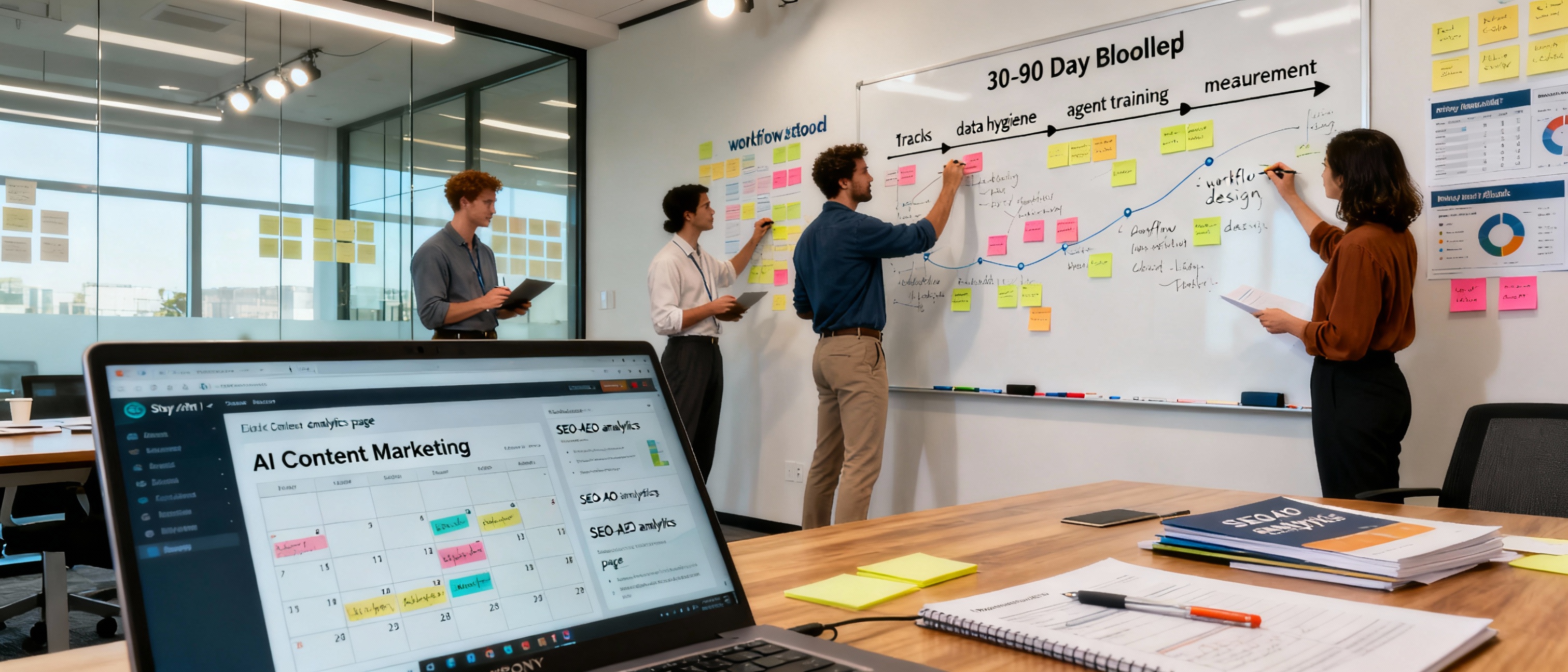
Let's turn ambition into a plan. A practical 30–90 day rollout follows four tracks: data hygiene, workflow design, agent training, and measurement. Start by cleaning your CRM fields, connecting calendars, and defining 6–8 service rules that really matter. Then map a thin-slice workflow: inbound request to booked appointment to invoice to follow-up.

You don't need a seven-figure transformation. Most small providers can get to value at under $500–$1,500 per month all-in, depending on seat count and payment volume. The spend falls into three buckets: CRM plus automation, conversational agent, and payments/billing.

For those looking to get started with proven frameworks and templates, visit our HOME page to explore comprehensive automation solutions designed specifically for small service providers.

Metrics that matter, and the risks you should accept

Measure improvements where they truly hit the business: show rate, hours saved per week, days-to-collect, repeat visit rate, and lead velocity rate. Gartner's 45% retention uptick among AI adopters is what you're aiming to match or exceed. Track content's role, too: does a three-email post-visit series move your rebooking rate by 5–10%?

There are risks—model drift, hallucinations, compliance blind spots—but they're manageable with guardrails: human-in-the-loop for sensitive replies, red-team prompts, role-based access, and a kill switch for any workflow that misbehaves. Do that, and your "AI employees" will keep earning their keep, week after week.

Sponsor Logo

This article was sponsored by Aimee, your 24-7 AI Assistant. Call her now at 888.503.9924 as ask her what AI can do for your business.

About the Author

Joe Machado

Joe Machado is an AI Strategist and Co-Founder of EZWAI, where he helps businesses identify and implement AI-powered solutions that enhance efficiency, improve customer experiences, and drive profitability. A lifelong innovator, Joe has pioneered transformative technologies ranging from the world’s first paperless mortgage processing system to advanced context-aware AI agents. Visit ezwai.com today to get your Free AI Opportunities Survey.

Want Content Like This for Your Business?

Let our AI-powered service create professional articles for you